| Active substance |
Ampicillin |
| Also known as |
Penbritin, Alpen |
| Blood pressure |
No direct effect |
| Chemical name |
(2S,5R,6R)-6-[(R)-2-Amino-2-phenylacetamido]-3,3-dimethyl-7-oxo-4-thia-1-azabicyclo[3.2.0]heptane-2-carboxylic acid |
| Dosage (medical) |
Typically 250 mg to 500 mg every 6 hours orally, or 500 mg to 2 grams every 6 to 8 hours intravenously, depending on the type and severity of infection |
| Dosage (sports) |
Not applicable |
| Effects |
Effective against Gram-positive and some Gram-negative bacteria |
| Formula |
C16H19N3O4S |
| Half-life |
Approximately 1 hour |
| Hepatotoxicity |
Rare, but hepatitis and cholestatic jaundice have been reported |
| Lab Test |
No specific lab test required for monitoring ampicillin therapy |
| Main action |
Bactericidal (kills bacteria by inhibiting cell wall synthesis) |
| Side effects |
Rash, diarrhea, nausea, allergic reactions (including anaphylaxis), and potential superinfection |
| Storage conditions |
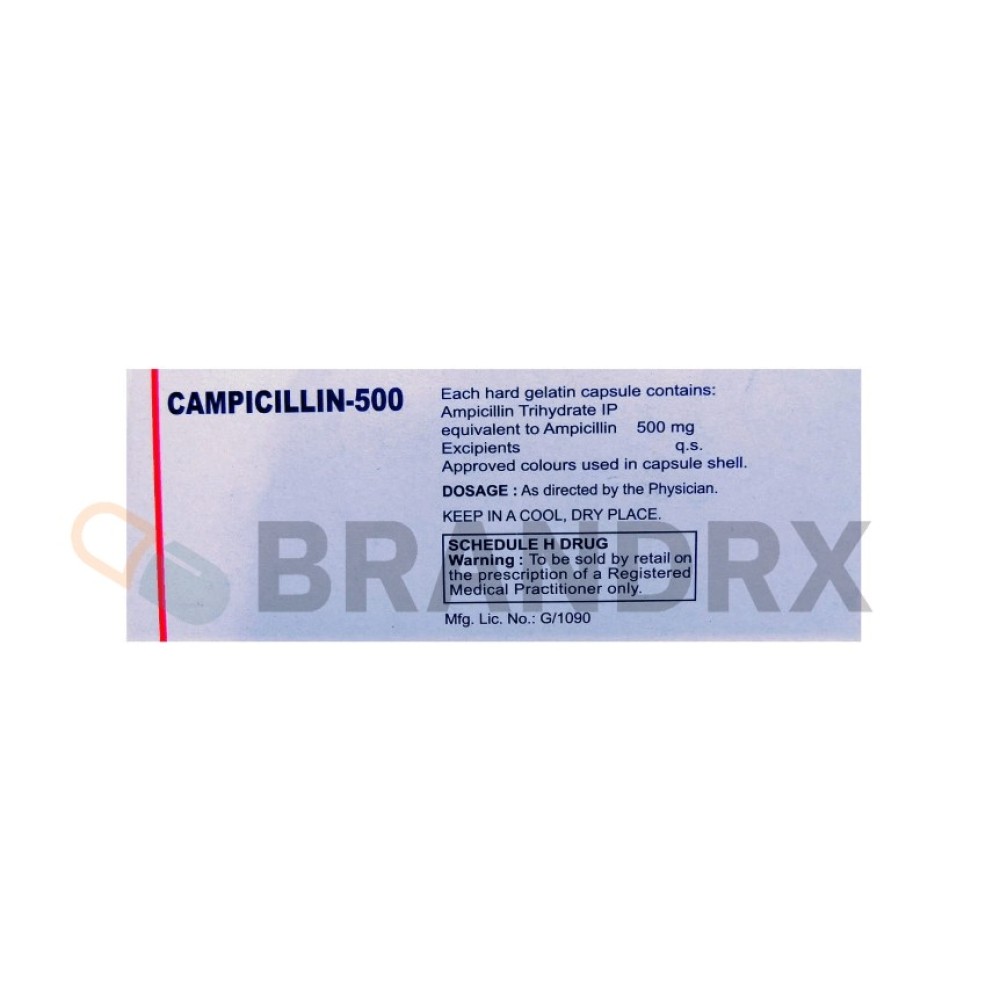
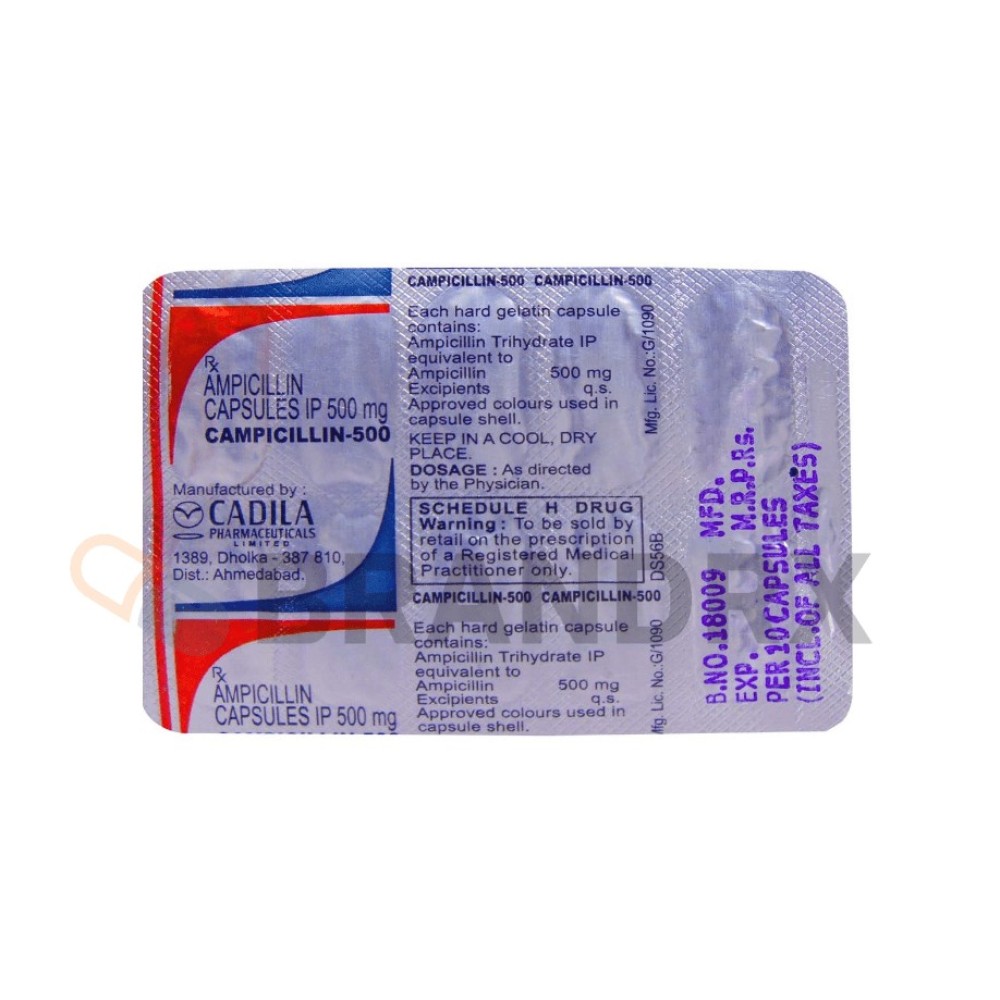
Store at room temperature, away from moisture and heat |
| Strength |
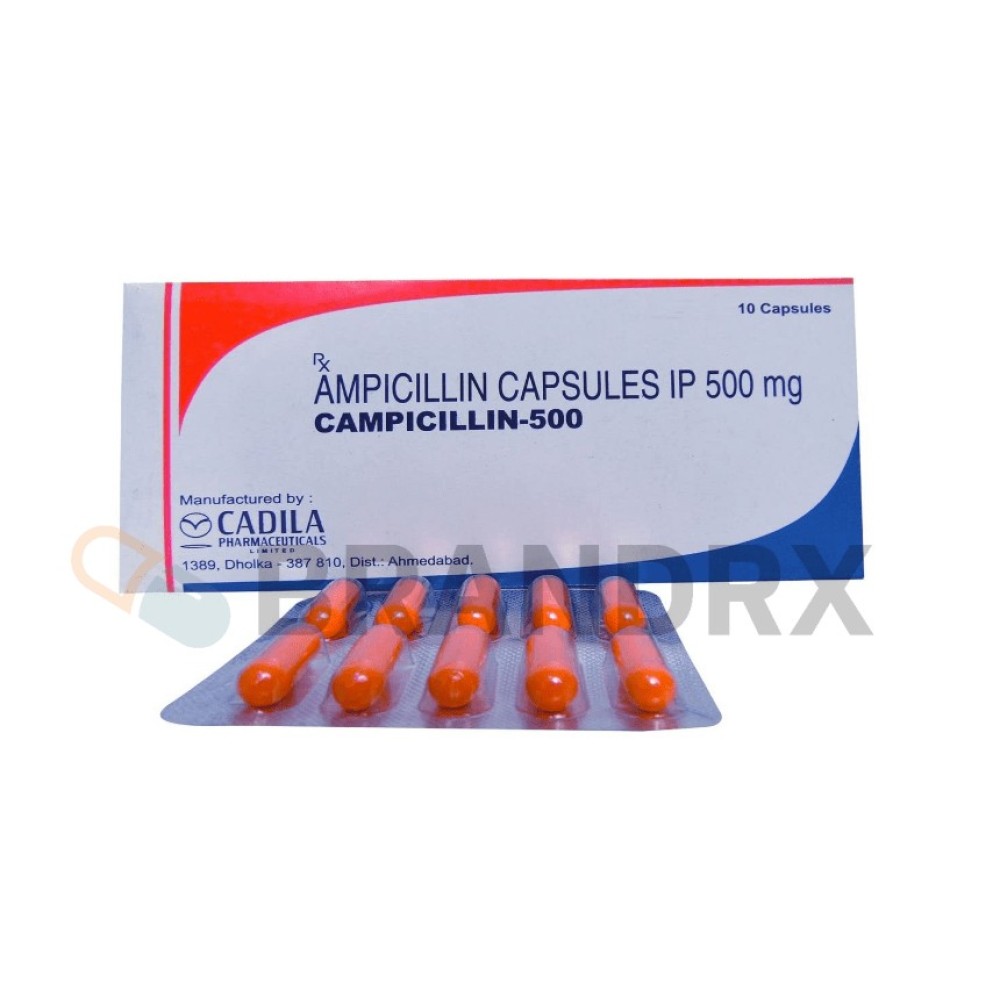
500mg |
| Substance class |
Antibiotic, specifically a beta-lactam |
| Trade name |
Principen, Omnipen, others |
| Use in sports |
None |
| Water Retention |
No significant effect |
| Manufacturer |
Cadila Pharmaceuticals Ltd. |
| Packing |
10 caps/blister |